Latest Updates

Our Blog

Read Jawai Bandh: Dam, Crocodiles, Birds & Visiting Tips (2026)
Jawai Bandh: Dam, Crocodiles, Birds & Visiting Tips (2026)

October 9, 2026

Jawai Bandh: Dam, Crocodiles, Birds & Visiting Tips (2026)

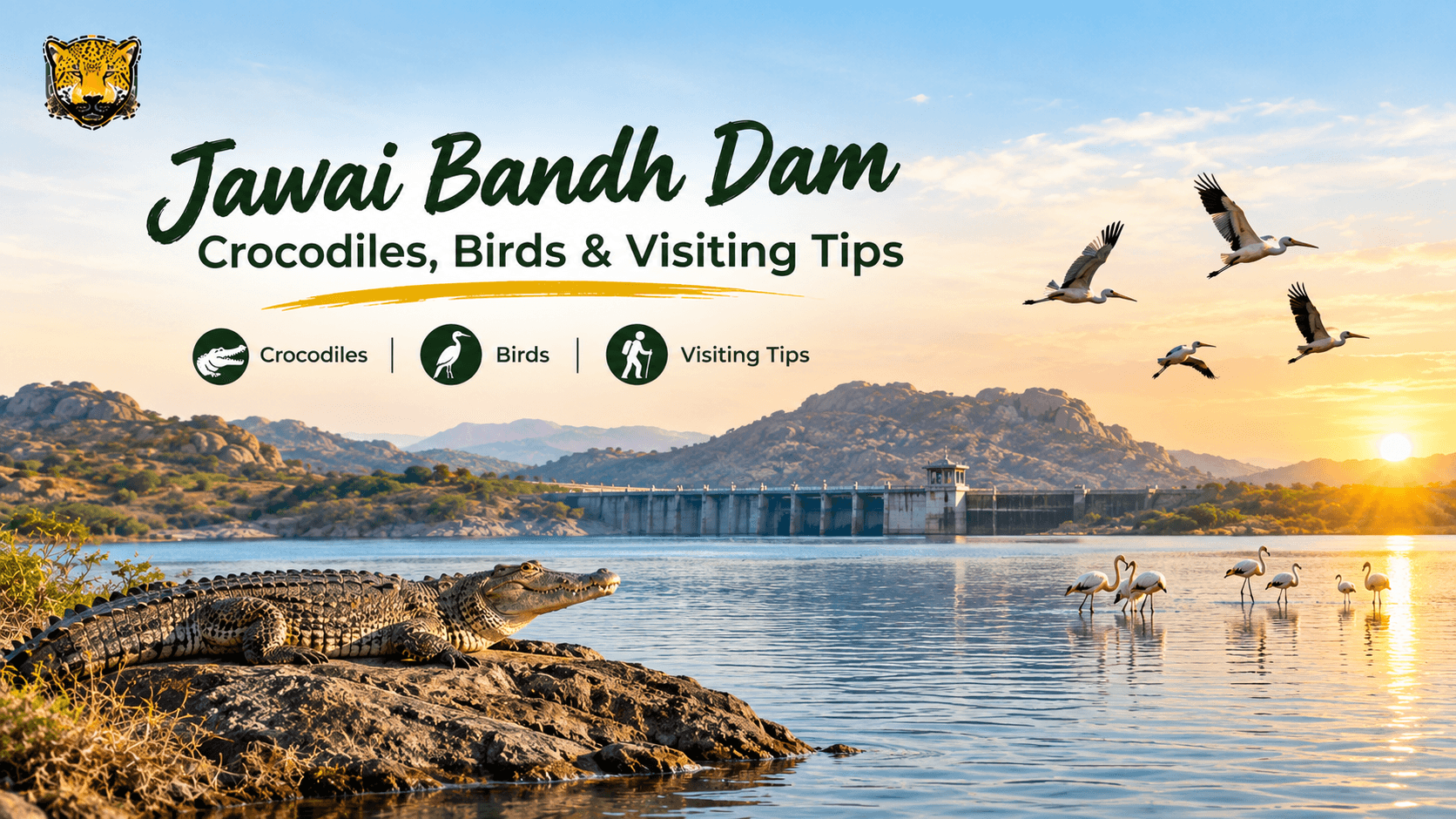
Jawai Bandh: Dam, Crocodiles, Birds & Visiting TipsJawai Bandh is the landmark that gave this whole region its name. The dam sits in Rajasthan’s Pali district, and it is both the lifeline of the local farming economy and a draw for wildlife lovers. At Jawai Safari’s, we’ve worked around these hills and waters since 2011, and many guests search for the dam before they book. Here is what Jawai Bandh is, what you can see there, and which of our safaris include it.What Is Jawai Bandh?Jawai Bandh, also called Jawai Dam, was built on the Jawai River, a tributary of the Luni. Work began in 1946 under Maharaja Umaid Singh of Jodhpur and finished in 1957. The reservoir covers roughly 13 sq km, and the dam is the main source of drinking water for Pali district. It also irrigates farmland across Pali and neighbouring Jalore.That history matters for visitors. The dam turned a dry, rocky landscape into one with permanent water, which is why the area supports both wildlife and the farming villages around it.Crocodiles at Jawai BandhThe reservoir is home to a large population of marsh crocodiles, also called muggers. A 2020 count reported 377, which makes the dam one of the better places in Rajasthan to see them. They are most often seen basking on rocks and banks in the warmer part of the day. Always keep a safe distance from the water’s edge, especially with children.Birds at Jawai BandhWinter is the best time for birdwatching. Migratory birds, including flamingos and cranes, are reported around the dam from roughly November to February, alongside resident species. Early mornings are cool and quiet, so bring binoculars and a camera. For a month-by-month breakdown, see our post on the best time to visit Jawai.Sunrise and Sunset at the DamThe open water and the granite hills behind it make the dam one of the better places in the area for landscape photography. Soft light in the first and last hours of the day works best. Bring a zoom lens for birds and crocodiles, and a wide lens for the hills.Seeing Jawai Bandh on a SafariWe don’t run a separate dam-only safari. Jawai Bandh is included in two of our safaris:Leopard Safari: an open-jeep safari through the granite hills, covering leopards, Jawai Bandh, crocodiles, birds and hill drives.Birding in Jawai: a shorter, bird-focused outing that includes Jawai Bandh, crocodiles and bird species.If leopards are your priority, choose the Leopard Safari. If birds and photography matter more, choose Birding in Jawai. Leopard sightings are never guaranteed on any safari, so treat the dam as one highlight of a wider landscape.How to Reach Jawai BandhThe dam is close to Jawai Bandh railway station, one of the nearest stops for travelers arriving by train. The nearest airport is Udaipur, roughly 150–165 km away, about 3 to 3.5 hours by road. For routes and transport options, see our post on Udaipur to Jawai. If you’d rather not drive, we can arrange pickup and drop.Where to Stay Near Jawai BandhResorts around the dam and nearby villages range from simple stays to luxury camps. See stay options near Jawai and book early in winter, since peak season fills quickly.More to Do Around JawaiFor temples, villages and other stops nearby, see our post on things to do in Jawai and Bera.Frequently Asked QuestionsWhat is Jawai Bandh?Jawai Bandh is a dam on the Jawai River in Rajasthan’s Pali district, built between 1946 and 1957. It supplies drinking water and irrigation and is known for crocodiles and migratory birds.Is there a separate Jawai Bandh safari?No. Jawai Bandh is included in our Leopard Safari and Birding in Jawai.Are there crocodiles at Jawai Bandh?Yes. The reservoir has a large population of marsh crocodiles, and a 2020 count reported 377. Keep a safe distance from the water.Which birds can I see at Jawai Bandh?Winter brings migratory birds, including flamingos and cranes, along with resident species. November to February is the best window.What is the nearest railway station to Jawai Bandh?Jawai Bandh railway station is the closest. Falna and Mori Bera stations are also used by travelers.When is the best time to visit Jawai Bandh?October to March, when the weather is cooler and winter birds are present.Planning your visit to Jawai Bandh? Book directly with Jawai Safari’s: Leopard Safari or Birding in Jawai.
Read more →
Read Places to Visit Near Jawai: Ranakpur, Kumbhalgarh & More
Places to Visit Near Jawai: Ranakpur, Kumbhalgarh & More

October 9, 2026

Places to Visit Near Jawai: Ranakpur, Kumbhalgarh & More

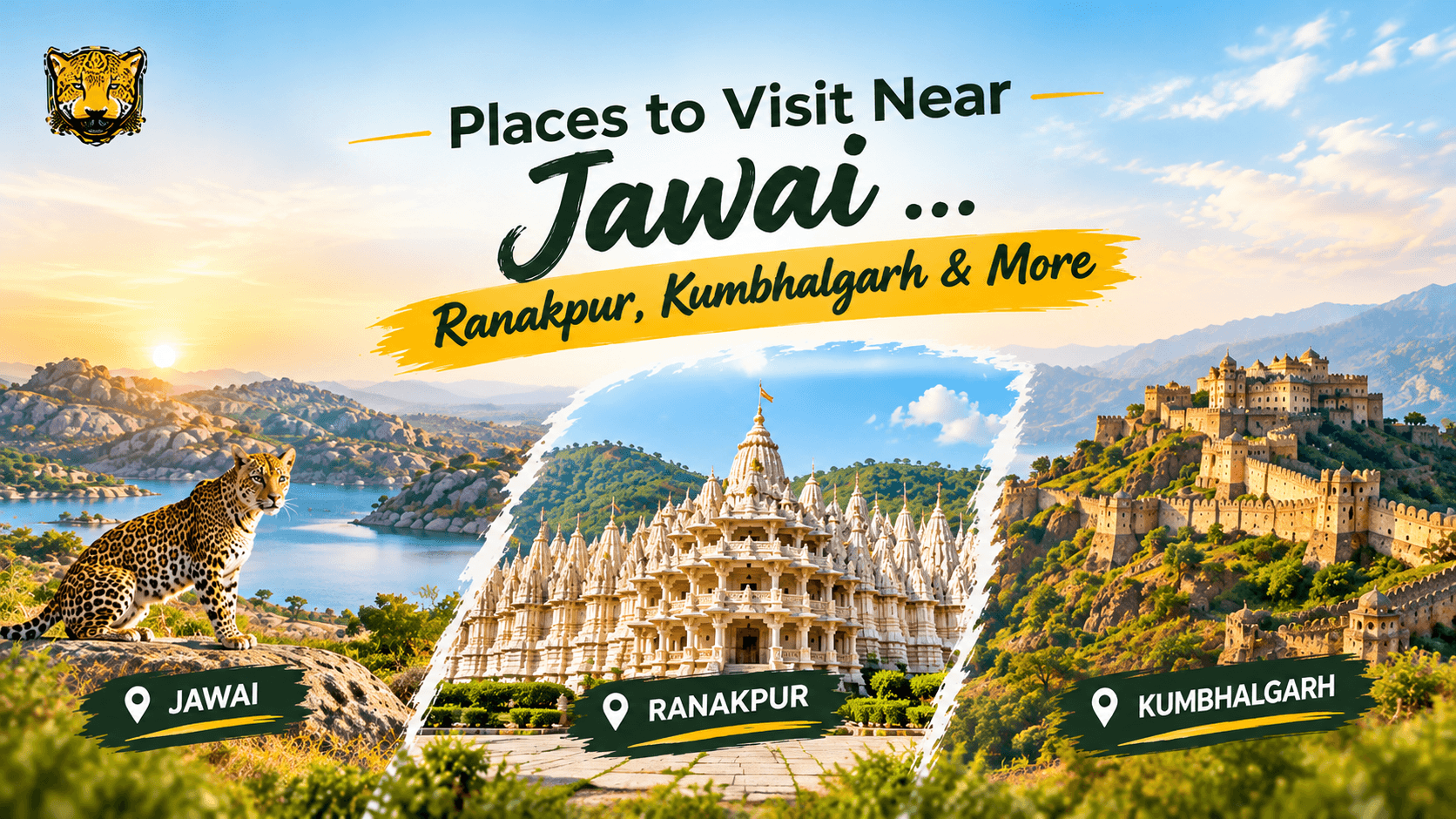
Places to Visit Near Jawai: Ranakpur, Kumbhalgarh, Mount Abu & UdaipurMost travelers come to Jawai for the leopards, then discover they have a day or two to spare and a lot of Rajasthan within reach. The places to visit near Jawai are some of the best in the state: a 15th-century marble temple, a fort with one of the longest walls in the world, Rajasthan’s only hill station and the lakes of Udaipur. At Jawai Safari’s, we’ve run safaris here since 2011, and guests ask us every week how to fit these places around their safari. Here is what each stop offers, how far it is from Jawai, and how to combine them without wasting a day in the car.Looking for what’s inside the Jawai area itself, such as the dam, the temples and the leopard hills? See our post on things to do in Jawai and Bera. This post covers the places beyond it.Quick Distance Overview from JawaiAll distances are approximate by road and vary slightly with your starting point and the safari zone you stay near.Ranakpur Jain Temple — roughly 50–60 km, about 1.5 hoursKumbhalgarh Fort — roughly 85–100 km, about 2 to 2.5 hoursMount Abu — roughly 100 km, about 2.5 hoursUdaipur — roughly 135 km, about 3 to 3.5 hoursRanakpur Jain Temple: The Nearest Major SightRanakpur is the easiest add-on to a Jawai trip, and for many people it is the highlight. The temple complex dates to the 15th century and is among the five holiest sites of the Jain community. The main temple, Chaumukha, is dedicated to Adinath, the first of the Jain teachers. Its 29 halls are supported by 1,444 carved marble pillars, and no two are alike.Ranakpur from Jawai takes roughly 1.5 hours by road, which makes it a comfortable half-day trip. Visit in the cooler morning or late afternoon, since you’ll be walking barefoot on marble. Dress modestly, with shoulders and knees covered. Leather items are not allowed inside, and there is a separate charge for cameras. Visiting hours for non-worshippers typically start around midday, so check the current timings before you plan around them.Kumbhalgarh Fort: The Great Wall of RajasthanKumbhalgarh is a UNESCO World Heritage fort built in the 15th century, and it is the birthplace of Maharana Pratap. Its wall runs about 36 km, among the longest in the world after the Great Wall of China. Hundreds of temples sit within its ramparts, and the surrounding Kumbhalgarh Wildlife Sanctuary covers more than 580 sq km.Kumbhalgarh from Jawai is a longer drive, roughly 2 to 2.5 hours, so it works best as a full-day trip. Ranakpur and Kumbhalgarh are only about 50 km apart, so many travelers combine them. Reach the fort in the morning, when it opens, and walk up before the afternoon heat. Allow 2 to 3 hours there. If you can stay for the evening light and sound show, check the current show timings and ticket details at the gate or with your hotel, as schedules change.Active travelers can also try the guided downhill trek from near Kumbhalgarh to Ranakpur, which passes the cave temples of Parshuram Mahadev through forested hills. It takes around four hours and needs a local guide.Mount Abu: Rajasthan’s Only Hill StationMount Abu sits roughly 100 km from Jawai and feels very different from the rest of the region, with cooler air, forested hills and a lake at its centre. The usual stops are Nakki Lake, the Dilwara Jain temples, Guru Shikhar (the highest point in the Aravalli range) and Achalgarh Fort. That fort was originally built by the Paramara dynasty and rebuilt by Maharana Kumbha in 1452.Jawai to Mount Abu is about 2.5 hours, so it suits an overnight stay better than a rushed day trip. Mount Abu is also a natural next stop if you are continuing toward Gujarat. The nearest railway station is Abu Road, about 28 km from the hill town.Udaipur: The Lake City Before or After Your SafariMost travelers pass through Udaipur anyway, because it is the nearest city with an airport. If you have time, build in an extra night for the City Palace, Lake Pichola and the old-city lanes. Udaipur is roughly 135 km from Jawai. For routes, timings and transport options, see our full post on Udaipur to Jawai. Ranakpur and Kumbhalgarh also sit conveniently between the two, so the drive can double as sightseeing.Sample Itineraries Combining Jawai With Nearby Places2 days (safari plus one sight):Day 1: Arrive, check in, evening safari. Day 2: Sunrise safari, breakfast, then Ranakpur in the afternoon, ending in Udaipur or back at your stay.3 days (the classic combination):Day 1: Arrive and take an evening safari. Day 2: Sunrise safari, then Kumbhalgarh Fort and Ranakpur in the same day. Day 3: Continue to Udaipur, or return to Jawai for a second safari.4 days (a longer loop):Days 1–2: Jawai, with two safaris in different zones. Day 3: Ranakpur and Kumbhalgarh. Day 4: Udaipur or Mount Abu, depending on where you’re heading next.Book the safari first and plan the sightseeing around it. Safari slots are fixed and fill quickly in winter, while temples and forts are flexible. See live safari availability, browse stays near Jawai or look at a combined package. If you’d rather not drive between these places yourself, we can arrange pickup and drop so the whole trip runs on one booking.Best Time to Visit These PlacesOctober to March suits both the sightseeing and the safari. Days are cooler, which makes the Kumbhalgarh walk and Ranakpur’s marble floors far more comfortable. It is also peak safari season, so book early. See the best time to visit Jawai for a month-by-month breakdown.Frequently Asked QuestionsWhat are the best places to visit near Jawai?Ranakpur Jain Temple and Kumbhalgarh Fort are the two most popular, followed by Mount Abu and Udaipur. Ranakpur is the closest and easiest to combine with a safari.How far is Ranakpur from Jawai?Roughly 50–60 km, or about 1.5 hours by road, which makes it an easy half-day trip.How far is Kumbhalgarh from Jawai?Roughly 85–100 km, or about 2 to 2.5 hours by road. Plan a full day, ideally combined with Ranakpur.Can I visit Ranakpur and Kumbhalgarh in one day from Jawai?Yes, but it is a long day. The two sites are about 50 km apart, so start early, see Kumbhalgarh first and Ranakpur afterwards, and plan for several hours on the road.How far is Mount Abu from Jawai?Roughly 100 km, about 2.5 hours. An overnight stay works better than a day trip.Should I book my safari before planning sightseeing?Yes. Safari slots are fixed and fill quickly in winter, while temples and forts are flexible.Planning your trip to Jawai and the places around it? Book directly with Jawai Safari’s: check live safari availability or browse our packages.

Read more →
Read Udaipur to Jawai: Distance, Route, Train & Flight (2026)
Udaipur to Jawai: Distance, Route, Train & Flight (2026)

October 1, 2026

Udaipur to Jawai: Distance, Route, Train & Flight (2026)

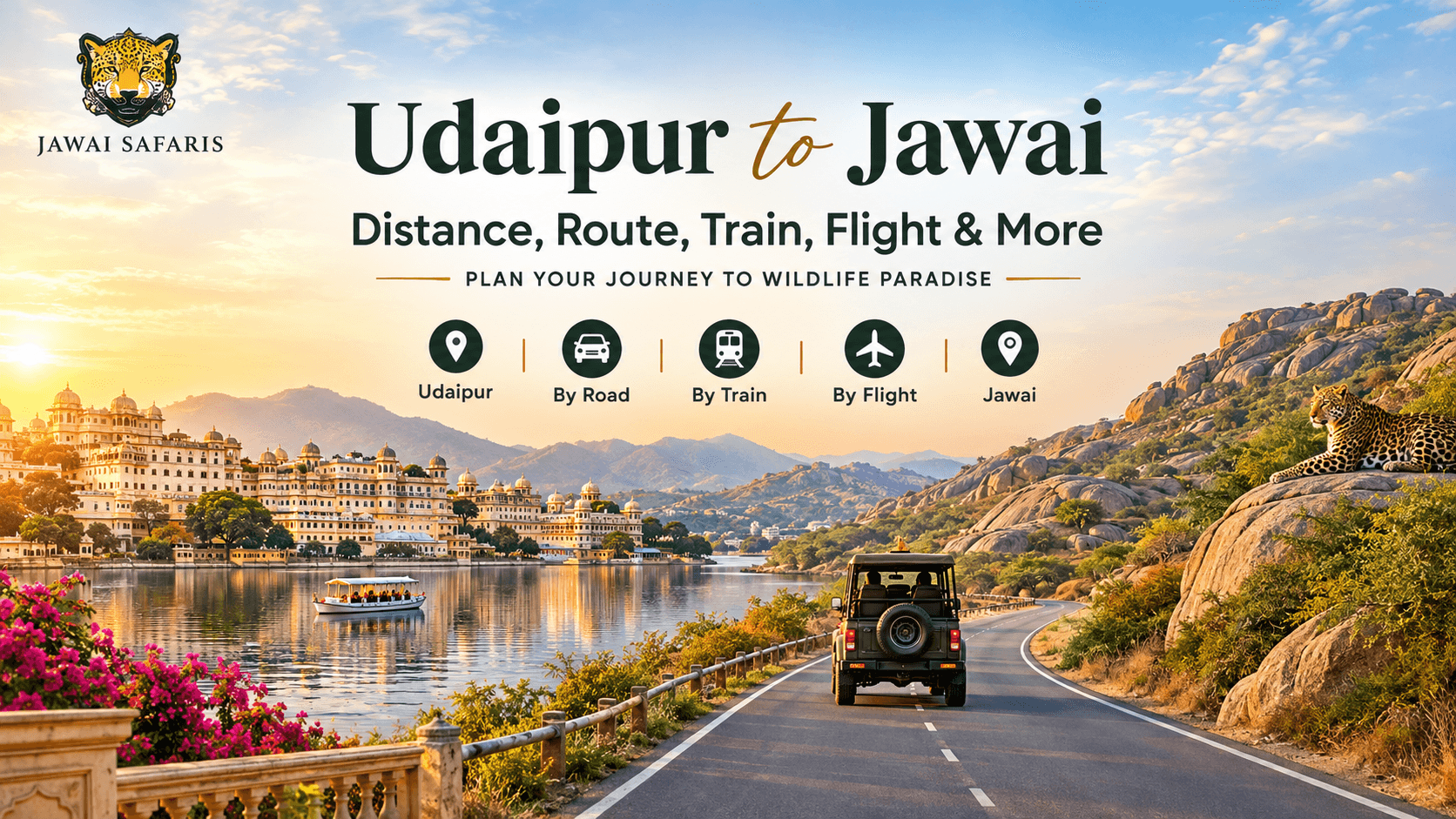
Udaipur to Jawai: Distance, Route, Train, Flight & Travel Tips (2026)If you're planning a trip from Udaipur to Jawai, you're taking one of Rajasthan's most popular wildlife-travel routes — Udaipur is the nearest city to Jawai with its own airport, which makes it the natural gateway for most travelers booking a Jawai safari from Udaipur. Here's a complete breakdown of distance, routes, travel options, costs, and what to actually expect on the journey.Udaipur to Jawai: Distance and Travel TimeThe distance from Udaipur to Jawai is approximately 135–165 km, depending on which safari zone or resort you're headed to — Bera, Sena, and the area around Jawai Bandh each sit at slightly different points along the route. By road, this takes roughly 3 to 3.5 hours. Udaipur's Maharana Pratap Airport (UDR) is the closest major airport to Jawai, and the nearest railway stations are Jawai Bandh (JWB), Mori Bera (MOI), and Falna (FA).Udaipur to Jawai by Road: Full Route BreakdownRoad is the most common, reliable, and genuinely enjoyable way to travel from Udaipur to Jawai — the route cuts through the Aravalli hills and rural Rajasthan, and it's a far more scenic drive than most people expect.Typical route:Udaipur → Gogunda → Pindwara → Jawai Bandh, via NH27. An alternate route runs via Ranakpur, which adds a short detour but lets you stop at the Ranakpur Jain Temple — one of the most architecturally striking temples in Rajasthan, and a popular break point for travelers making this exact drive.What the journey actually looks like:The first hour out of Udaipur passes through hilly, forested terrain as you climb into the Aravalli rangeSmall towns and villages break up the drive, with basic fuel stops and roadside dhabas (local eateries) available at regular intervals — worth planning a chai or breakfast stop around the Gogunda or Pindwara stretchMobile network coverage is generally reliable along the main highway but can weaken in short patches through the hillsRoad conditions on NH27 are good for most of the stretch, though the final approach into the safari zones involves narrower village roadsTravel options for the road journey:Private taxi/cab — the most flexible option for most travelers, typically arranged one-way or round-trip; fares vary by season and vehicle type, so it's worth confirming current rates when you bookSelf-drive — straightforward via NH27 for most of the route, though we'd recommend arriving before dark if you're unfamiliar with the final village-road stretchArranged pickup and drop — if you'd rather not organize transport yourself, we offer direct pickup and drop from Udaipur as part of your safari booking, with a driver familiar with the routeUdaipur to Jawai by TrainTrain connectivity directly between Udaipur and Jawai is limited, and there isn't a reliable direct service covering this specific route. Most travelers arriving by train come from other major cities — Mumbai, Ahmedabad, Jaipur, or Delhi — and get off at Falna or Jawai Bandh station, then arrange a short taxi transfer (Falna to the safari zones is roughly 30–40 km; Jawai Bandh station sits much closer, within 15–20 km of most zones). If a train from Udaipur specifically matters to your itinerary, check current IRCTC schedules close to your travel date, since routes and frequencies do shift.Udaipur to Jawai by AirThis is genuinely Udaipur's biggest advantage over other nearby cities for reaching Jawai: Maharana Pratap Airport (UDR) has regular domestic flight connections to Delhi, Mumbai, and other major Indian cities, making it the fastest practical entry point. Fly into Udaipur, then cover the Udaipur to Jawai leg by road in roughly 3 to 3.5 hours. For travelers coming from outside Rajasthan, this fly-then-drive combination is usually faster overall than a long train or road journey from a farther city.Udaipur to Jawai: Which Option Should You ChooseFlying in from outside Rajasthan? Fly into Udaipur, then continue by private taxi or our pickup service — this is the fastest and most comfortable combination for most travelers.Already road-tripping through Rajasthan (say, combining Udaipur with Jodhpur or Mount Abu)? Driving yourself or hiring a private cab for the full Udaipur to Jawai stretch is practical, and lets you build in a stop at Ranakpur Temple.Traveling with family or on a tighter schedule? An arranged pickup removes the uncertainty of navigating unfamiliar village roads near the safari zones, especially if you're arriving in the evening.Traveling by train from a farther city? Plan your route through Falna or Jawai Bandh station rather than Udaipur, since there's no strong direct Udaipur-to-Jawai rail link.Distance from Udaipur to Each Jawai Safari ZoneDepending on which zone you're staying near, the exact distance from Udaipur varies slightly:Bera Zone: approximately 135–145 kmSena Zone: approximately 140–150 kmJawai Dam area: approximately 150–165 kmMaad and Temple Zone: approximately 145–160 kmThese differences are small enough that your overall travel time from Udaipur stays in the same 3 to 3.5-hour range regardless of zone.Best Time to Make the Udaipur to Jawai TripThe road trip itself is most comfortable between October and March, when daytime temperatures are cooler and the drive through the Aravalli hills is more pleasant than during the summer heat. This also happens to be peak safari season in Jawai — see our complete best time to visit Jawai post for a full month-by-month breakdown.Planning Your Jawai Safari After Reaching From UdaipurOnce you've made the trip from Udaipur, timing your first safari matters. We'd recommend arriving the evening before your first slot rather than the same morning — sunrise safaris depart early, and a same-day 3-hour drive followed immediately by a safari can take the edge off the experience. You can check live safari availability, browse stay options, or look at a combined package that bundles your safari and stay together.Sample Itinerary: Udaipur to Jawai and BackDay 1: Depart Udaipur by road (or arranged pickup) in the late morning, stop at Ranakpur Temple en route if time allows, arrive in Jawai by early-to-mid afternoon, check into your stay, relax before an evening safari.Day 2: Sunrise safari in the morning, breakfast and relaxation at your resort, depart for Udaipur by early-to-mid afternoon, arriving back by early evening.This two-day structure works well for travelers who want a complete Jawai experience without an extended trip, though 3 days allows for both a sunrise and sunset safari in different zones.Why Travel With Jawai Safari'sWe've operated safaris in Jawai since 2011, and our pickup-and-drop service from Udaipur is run by local drivers who know this exact route well, including the final village-road stretch that can be confusing for first-time visitors. Booking your transport and safari together through jawaisafaris.com also means one point of contact for your whole trip rather than coordinating multiple vendors separately.Frequently Asked QuestionsHow far is Jawai from Udaipur?Approximately 135–165 km, depending on the safari zone, with a drive time of roughly 3 to 3.5 hours by road.What is the best way to travel from Udaipur to Jawai?For most travelers, flying into Udaipur's Maharana Pratap Airport and continuing by road (private taxi or arranged pickup) is the fastest, most convenient combination.Is there a direct train from Udaipur to Jawai?No reliable direct train service covers this specific route. Most travelers either drive the full distance from Udaipur or take a train to Falna or Jawai Bandh from other major cities and arrange a short taxi transfer.Can I book transport and my Jawai safari together from Udaipur?Yes — we offer pickup and drop from Udaipur as part of your safari booking with Jawai Safari's.Is the road from Udaipur to Jawai safe to drive at night?The main highway stretch is generally fine, but the final approach into the safari zones involves narrower village roads that are easier to navigate in daylight — we'd recommend timing arrival before dark if self-driving.How many days should I plan for a trip from Udaipur to Jawai?A 2-day trip covers one sunrise or sunset safari comfortably; 3 days allows you to experience both and explore more than one safari zone.Ready to plan your trip from Udaipur to Jawai? Check live safari availability, arrange pickup and drop from Udaipur, or browse our packages.

Read more →
Read Jawai vs Ranthambore: Which Wildlife Safari Should You Choose?
Jawai vs Ranthambore: Which Wildlife Safari Should You Choose?

September 30, 2026

Jawai vs Ranthambore: Which Wildlife Safari Should You Choose?

Jawai vs Ranthambore: Which Wildlife Safari Should You Choose?If you're planning a wildlife trip in Rajasthan, you've likely narrowed it down to two names: Jawai and Ranthambore. Both offer incredible safaris, but they're genuinely different experiences — one built around leopards in an open, unfenced landscape, the other a government tiger reserve with a much bigger tourism footprint. At Jawai Safari's, we obviously run safaris in Jawai, but we want to give you an honest, useful comparison so you can pick whichever actually fits your trip.The Core Difference: Leopards in the Open vs. Tigers in a ReserveRanthambore is a formal, government-run tiger reserve spanning roughly 1,334 sq. km, divided into 10 numbered safari zones (1–5 are considered core zones with the highest tiger density). It's part of India's Project Tiger conservation program and home to around 80–85 tigers.Jawai is a completely different kind of landscape — granite hills and open terrain with no boundary fences or forest-department gate system. It's home to an estimated 50–60 leopards, living in close, well-documented coexistence with the local Rabari herding community. Rather than 10 numbered zones, Jawai is worked across 5 areas (Bera, Sena, Maad, Jawai Dam, and Temple Zone), and safari routes stay flexible based on where leopards are actually active that day.Cost ComparisonRanthambore:Canter (shared, larger vehicle): from around ₹1,800 per personShared gypsy: from around ₹3,500 per personPrivate gypsy runs higher, and popular zones/dates get booked out well in advance through the official forest department portalJawai:Shared leopard safari: from ₹1,000 per personPrivate leopard safari (per jeep): from ₹4,000Full-day safari: ₹15,000–30,000(current live rates always shown on our safari page)Jawai is generally the more affordable option, especially for shared/budget travelers, and doesn't require navigating a government booking portal.Sighting Chances: Tiger vs. LeopardNeither destination can honestly guarantee a sighting — no legitimate operator anywhere should claim otherwise, since wildlife movement is never fully predictable. That said, the two experiences differ structurally: Ranthambore's zone allocation for each safari is randomized by the forest department, so you don't choose your zone and are subject to whatever's assigned that day. Jawai's open, unfenced landscape and flexible routing means trackers can adapt the safari route in real time based on the latest leopard movement, which tends to work in visitors' favor.Crowds and ExperienceRanthambore is one of India's most visited tiger reserves, with a large, established tourism infrastructure — more vehicles, more visitors per zone, and a bigger, more "produced" safari experience overall, often with a dramatic backdrop from the historic Ranthambore Fort. Jawai is considerably more intimate: fewer vehicles, a quieter landscape, and safaris that feel more personal, partly because it's a newer, less mainstream destination than Ranthambore.Getting ThereRanthambore is well connected to Jaipur and Delhi, making it an easy add-on to a Golden Triangle itinerary. Jawai sits closer to Udaipur and Jodhpur, making it a natural fit if your Rajasthan trip already includes those cities.So, Which Should You Choose?Choose Ranthambore if: you specifically want a tiger safari, are already routing through Jaipur/Delhi, and don't mind a bigger, more touristed reserve experience.Choose Jawai if: you want a more intimate, flexible safari, are traveling via Udaipur or Jodhpur, care about a unique human-wildlife coexistence story alongside the wildlife itself, or want a generally more budget-friendly experience.Doing a longer Rajasthan trip? Many travelers do both — Ranthambore for tigers, Jawai for leopards — as part of one itinerary.Frequently Asked QuestionsIs Jawai better than Ranthambore for a first-time wildlife safari in India?Both are excellent, but for very different reasons — Ranthambore for tigers and established infrastructure, Jawai for a more intimate leopard safari and lower cost. Neither is objectively "better"; it depends on what you're looking for.Is a leopard safari in Jawai cheaper than a tiger safari in Ranthambore?Generally yes — Jawai's shared and private safari rates tend to run lower than Ranthambore's gypsy and canter pricing, and Jawai doesn't require booking through a government forest portal.Can I visit both Jawai and Ranthambore on the same trip?Yes — many travelers combine both as part of a longer Rajasthan itinerary, since Ranthambore connects well with Jaipur/Delhi and Jawai connects well with Udaipur/Jodhpur.Ready to plan your Jawai leopard safari? Check live availability with Jawai Safari's, or browse our packages for a complete trip.

Read more →
Read Official Jawai Safari Booking: A Traveler's Verification Checklist
Official Jawai Safari Booking: A Traveler's Verification Checklist

September 23, 2026

Official Jawai Safari Booking: A Traveler's Verification Checklist

Official Jawai Safari Booking: A Traveler's Verification ChecklistBooking travel online always carries some risk, and India's Ministry of Home Affairs has publicly flagged a rise in fake booking websites and WhatsApp-only "agents" targeting tourists nationwide — fake sites, cloned social pages, and agents who take a deposit and go quiet. This isn't specific to Jawai, but it's worth knowing how to protect yourself, and how to recognize a genuine, official Jawai safari booking platform before you pay anyone.A Simple Checklist Before You Pay AnyoneType the website address yourself rather than clicking a link from an ad, forwarded message, or social postLook for a live booking system — real dates and slot availability, not just a back-and-forth chatCheck for more than one way to reach them — phone, email, and WhatsApp, not a single mobile number as the only contactRead reviews tied to the actual business on Google, not just testimonials pasted onto a websiteAvoid time-pressure tactics — "only one slot left," "price expires in an hour" — these are common pressure patterns, not a reason to skip your own checksConfirm details before paying in full — a transparent operator is comfortable with an advance payment and clear confirmation, not demanding the full amount immediatelyWhat "Official" Should Actually MeanJawai isn't a fenced national park with government-issued operator permits the way Ranthambore is — there's no forest department licensing system to point to. So when you see the word "official" used by any safari booking platform here, including ours, the honest way to evaluate it isn't a certificate — it's whether the platform can show you real, verifiable proof: a working direct-booking system, a genuine track record, transparent policies, and reviews you can check independently. That's what we mean when we say Jawai Safari's is an official Jawai safari booking platform — and it's exactly what you should expect from anyone using that word.How We Keep Every Booking Direct and TransparentDirect booking, no middlemen — you book straight with local safari operators, with no agent markup or hidden commissionLive availability system — real-time slots and instant confirmation the moment you book, not a manual chat replyOperating in Jawai since 2011 — a genuine, checkable track record, not a site that appeared overnightTransparent shared-safari policy — if a shared safari doesn't reach its minimum seats, you're automatically offered an upgrade or a 100% refund, stated upfrontMultiple ways to reach us — phone, WhatsApp, and email, and our reviews are verifiable directly on Google"I was initially skeptical, but seeing the leopards in their natural habitat just days [after booking] was incredible. The guides are extremely knowledgeable and they arranged everything seamlessly."— Neha Sharma (Google review)Frequently Asked QuestionsHow can I verify an official Jawai safari booking site before I pay?Check for a live, real-time booking system, multiple independent contact methods, a clearly stated refund policy, and Google reviews you can verify yourself — apply this to any operator you're considering, including us.Is jawaisafaris.com a genuine, official booking platform?Yes — we book you directly with local Jawai safari operators with no middleman markup, run on a live availability system with instant confirmation, and have operated in Jawai since 2011, with reviews verifiable on Google.Is it safe to book a Jawai safari through WhatsApp?WhatsApp alone isn't a red flag — many legitimate operators use it for day-to-day communication. The concern is when it's the only way to reach them, with no website, email, or independently verifiable reviews.Ready to book directly and transparently? Check live availability with Jawai Safari's — an official, direct Jawai safari booking platform since 2011.

Read more →
Read Best Time to Visit Jawai: Winter Safari Guide 2026–27 (Oct–Mar)
Best Time to Visit Jawai: Winter Safari Guide 2026–27 (Oct–Mar)

September 18, 2026

Best Time to Visit Jawai: Winter Safari Guide 2026–27 (Oct–Mar)

Best Time to Visit Jawai: Your Complete Jawai Winter Safari Guide (Oct–Mar)If you're researching the best time to visit Jawai, every local guide will tell you the same thing — and at Jawai Safari's, we've been running safaris in this landscape since 2011, so it's a question we answer daily. Winter is hands-down the best season for a Jawai leopard safari. From October through March, a Jawai winter safari benefits from cooler weather, more active leopards, and Jawai Bandh at its most beautiful. With over 50 leopards calling this landscape home, timing your trip right is the single biggest factor in a great sighting.Why Winter Is the Best Time to Visit JawaiJawai sits in Rajasthan's Pali district, a semi-arid landscape where summer temperatures cross 40°C — punishing for both visitors and wildlife. Winter changes everything. Daytime temperatures settle into a comfortable 22–27°C, nights cool to 9–12°C, and leopards — most active at dawn and dusk — stay visible for longer stretches instead of retreating into shade. This is exactly why a leopard safari in Rajasthan during winter consistently outperforms a summer trip. It's also peak migratory bird season, with flamingos and cranes settling in around Jawai Bandh."We've done safaris across Africa and India — Jawai stands out for its intimacy and sheer leopard density. The hospitality was warm and the sightings were unforgettable."— Marcus Webb, visited February 2026 (Google review)Jawai Weather and Safari Conditions, Month by MonthOctober — Day: 33–36°C (cooling through the month) | Night: 18–20°CTransition month into the winter safari season — still warm early on, monsoon greenery still visible, quieter crowds.November — Day: 28–30°C | Night: 14–16°CWinter in Jawai sets in properly; migratory birds start arriving in numbers.December — Day: 23–25°C | Night: 9–11°CPeak season begins — cold mornings, excellent leopard activity.January — Day: 22–24°C | Night: 9–10°CThe coldest month, and prime time for bird photography with flamingos and cranes settled in.February — Day: 25–27°C | Night: 11–13°CStill excellent for sightings, slightly warmer — a comfortable middle-ground month.March — Day: 31–33°C | Night: 17–19°CTransition out of winter — the last comfortable month before summer heat returns.(Temperatures are regional averages for the Pali district and vary year to year — always check a short-range forecast a few days before your trip.)What to Pack for a Winter Safari in JawaiWarm layers for sunrise safaris — the 10–15°C day-to-night swing means mornings feel colder than daytime numbers suggestA light jacket or shawl, easy to remove as the day warms upNeutral-colored clothing (beige, olive, brown) to blend into the landscapeSunglasses and a hat for daytime slotsA camera or phone with zoom — binoculars are provided onboard, but your own gear helps for photosSafari Timings During the Winter SeasonWinter safaris run in both sunrise and sunset slots, with full-day options for travelers who want to cover multiple zones in one visit. Exact slot times shift slightly through the season as sunrise/sunset times change, so the most accurate, current timings are always shown on our live booking page.Why Book Your Winter Safari With Jawai Safari'sWe're a direct, official Jawai safari operator — no middlemen, no hidden agent fees. Our local trackers monitor real-time leopard movement across all five safari zones (Bera, Sena, Maad, Jawai Dam, and Temple Zone), so during winter's peak activity season, you're taken to wherever leopards are actually active that day, not a fixed route. Combined with over a decade of experience in this exact landscape, that's how we keep sighting odds high even during the busiest months.Should You Combine Your Safari with a Stay?Winter is peak season, so resorts near Jawai Bandh fill up faster than any other time of year. If you're planning your trip around the best time to visit Jawai, lock in both your safari slots and your stay together, or choose one of our combined packages to simplify planning.Frequently Asked QuestionsWhat is the best time to visit Jawai for a leopard safari?December through February offers the most reliable combination of cool weather and high leopard activity, making it the best time to visit Jawai for most travelers. January adds excellent bird photography on top of that.Is a Jawai winter safari really better than a summer one?Yes — cooler temperatures keep leopards active for longer stretches during the day, improving sighting odds compared to peak summer heat when they retreat into shade.Do I need to book in advance during winter?Yes, strongly recommended. Winter is peak season, and slots — especially sunrise safaris — fill up quickly, particularly through December and January.Is Jawai cold in winter?Mornings and evenings get genuinely cold, especially December and January (down to 9–10°C), so warm layers are essential even though afternoons are pleasant.Planning your trip around the best time to visit Jawai? Book directly with Jawai Safari's — check live safari availability or browse our packages to plan your full trip.

Read more →
Read Things to Do in Jawai & Bera | Safari & Wildlife Guide
Things to Do in Jawai & Bera | Safari & Wildlife Guide

August 12, 2026

Things to Do in Jawai & Bera | Safari & Wildlife Guide

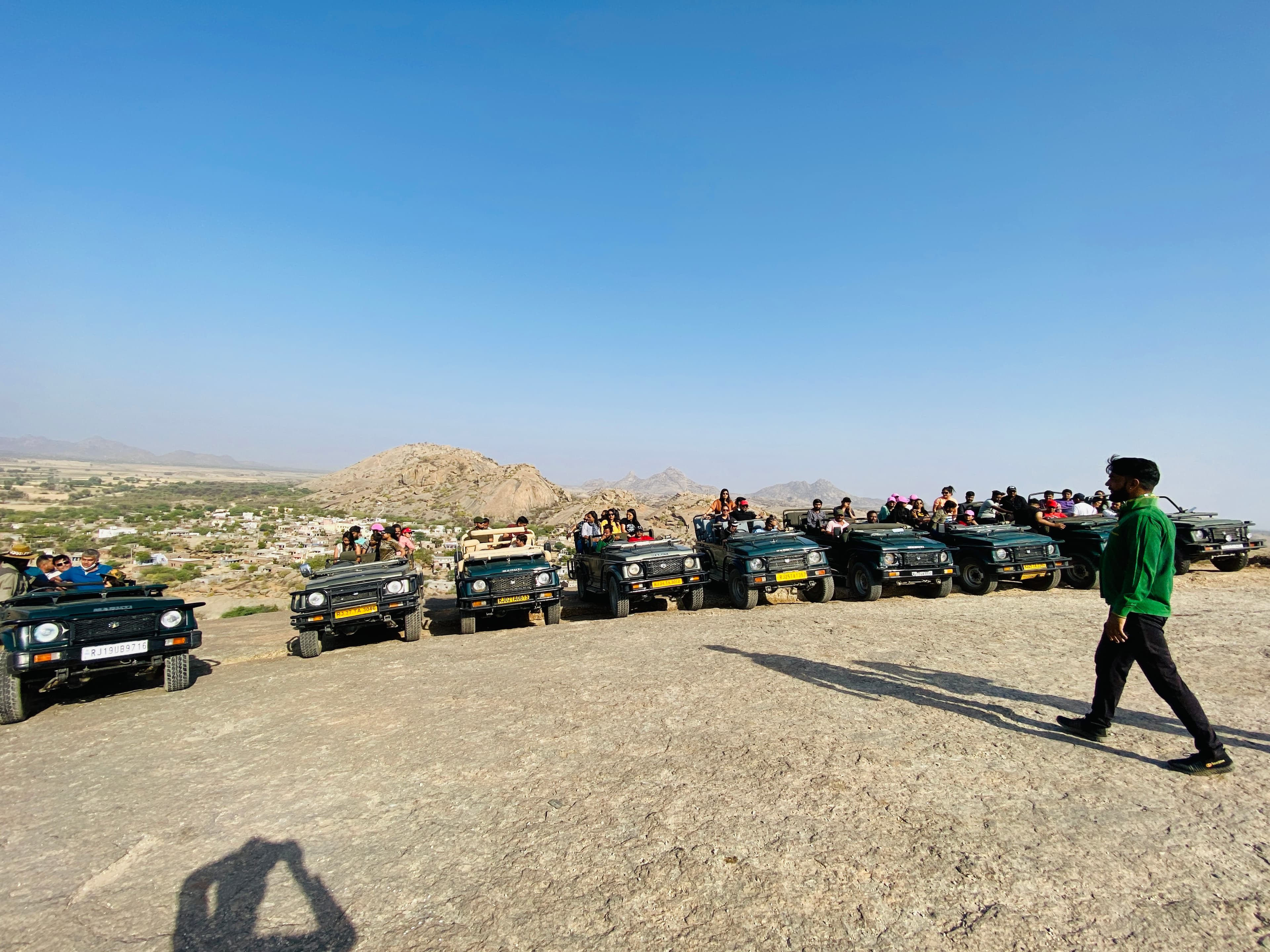
Things to do in Jawai and BeraRajasthan is privileged with many wildlife destination among which Bera and jawai are known as capital of leopards. Basically Bera and jawai are the two names of one wildlife destination. Bera is small village where people lives and jawai is the name of complete area where wild animal lives ,birds lives and humans lives, so bera comes under jawai region.Jawai is situated in the lap of majestic aravali range of western rajasthan in District pali. This area is mostly famed for wildlife activities, adventures game drives covering legion recreations and beautiful landscape which hosts a diverse eco-system. If you make visit to jawai or bera, there should be some idea what all you can enjoy in jawai.Being a Bera localite and professional hotel & safari operator in jawai and bera, i can tell everyone much better about this area without any exaggerating and fable information. So have a look to the list of things to do in Bera and Jawai, which can make your visit worth in Jawai.1. LEOPARD SAFARILeopards are the prevalent attraction in Bera and Jawai, you can relish sightings of this elusive big cats by Booking leopard safari activity at Jawai safari's. The operators organise this activity two times a day (i.e Early morning and Evening) in a customised 4X4 vehicle, leopard safari gets complete in 2-3 hours. Jawai is surrounded by huge hills which are shaped by lava millons of year ago, now the natural caves in those lava hills (Jawai hills) has become home for leopards. The Sighting chances of leopards in Jawai is much higher than other wildlife destination in the world, experience of leopard safari in Bera or jawai is a must do activity. Best time to do this activity is September to June.2. MIGRATORY BIRDS WATCHINGJawai is the home of Migratory birds like flamingos, cranes, goose, rudyshell duck and other permanent residence of Birds in jawai like black wing kite, shikra , felcon, vultures, rock eagle owl, owlet, robins, etc. Birdlife safari is conducted in day time its open in winter season (November to March). Booking of Birdlife safari can be done at Jawai safari's. This activity is enjoyable for Bird lovers and Bird photographers.3. JUNGLE SAFARIDoing jungle safari in bera is another amazing experience, you can take this safari when you visit Jawai or Bera, this safari is organised to spot wild animals like hyena, sloth bear, deers, wild boar, jungle cat and if luck is in your favour then india wolf might spot. Jungle safari is usually operates in early morning and late Night, so to do this activity you have to book your room in Bera or Jawai.4. CROCODILE SIGHTINGSThere is more than 300 crocodiles home in Jawai sanctuary, which convert this place into the only crocodile sighting destination in rajasthan. Crocodile watching is done in afternoon when they come out of water for sun basking at bank of Jawai Dam and jawai river. This activity is completely free for those who book leopard safari from Jawai Safari’s(www.jawaisafari.com)5. JAWAI DAMThis is the biggest water reservoir of western rajasthan with 62 feet (18.89 meter )depth. Jawai dam was built by Maharaja umaid singh of Jodhpur in 1957. Now a days jawai dam has become a tourist attraction after officially declaration of Jawai Dam crocodile sanctuary in 2013. It has beautiful view when overflow water of Dam flush out from its 13 channel gates. Jawai Dam also attracts visitors with its sun set point from catchment area of Jawai Dam.5. VILLAGE SAFARIBeside wildlife, Bera also shows dynamic picture of rural side of rajasthan in the most vibrant form. One who want to see real rajasthani villagers and perceive the way of their living , dressing, cooking and a genuine smile when you visit their place. This activity is enjoyable only in winters because its too hot in other days in open vehicle to visit villages.5. RANAKPUR TEMPLE5. KUMBHALGARH FORTIt's a world heritage site and well known in world wide for its history and architecture. Fort is surrounded by 15KMs long thick wall with seven huge gates and it is the second largest wall in the world after Great wall of china. In free time at jawai , one can also go to visit kumbhalgarh Fort , it is 90 KM far from jawai.

Read more →